What we investigate
We build models that let cities and operators test how transport systems may respond before they commit to a policy, service or investment. Our work connects travel demand, network performance and the decisions of travellers and service operators across strategic, tactical and operational timescales. We use simulation, equilibrium models, optimisation and learned surrogate models to compare scenarios, reveal trade-offs and identify the conditions under which an intervention is likely to work.
This collection turns the lab’s modelling contributions into website-ready case studies. Each case includes a concise summary, the decision or research problem, the modelling method, the main findings and the limits that matter when interpreting the result. Dates refer to the cited publication, deliverable or project record.
Focused research connected to this theme.
A meta-model for transport network roadworks
Roadworks interact with demand, network structure and alternative routes. A planner may need to compare many combinations of closed sections and demand levels before…
Designing the model architecture for software agnostic transport model suite
A policy can change where households and firms locate, how people organise a day, and how vehicles move through the network. These effects unfold…
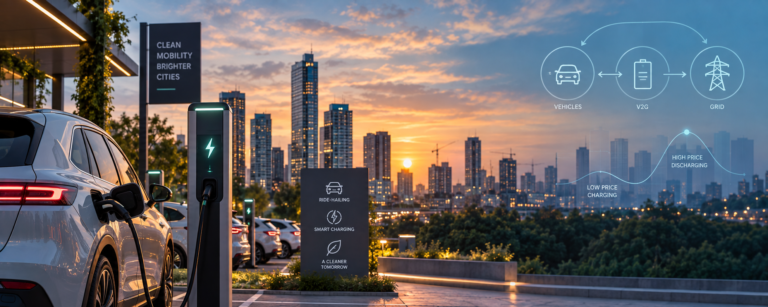
Modelling Ride Hailing Fleets with V2G
Vehicle-to-grid technology turns an electric fleet into a mobile energy resource. The same battery must still deliver trips, so charging and discharging decisions affect…

Modelling shared autonomous services with a dynamic network equilibrium
Travellers choose routes and departure times in response to congestion. At the same time, a shared autonomous vehicle operator links bookings into vehicle chains.…
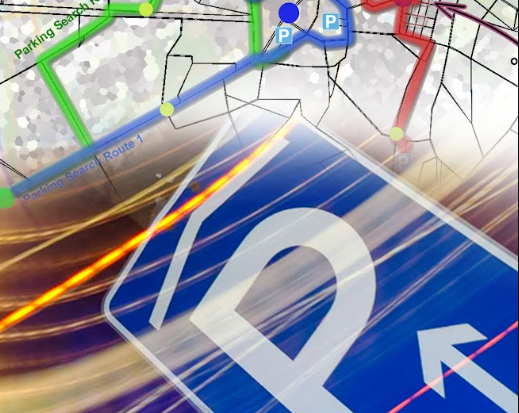
Network modelling for parking search
Parking occupancy is both an outcome of demand and a cause of traffic. Drivers may pass several locations, weigh price and walking distance against…
Projects connected to Modelling u0026 Simulation.

Completed
SYNCHROMODE
SYNCHROMODE aims to develop a data-driven ICT toolbox for improving the management of transport operations from a multimodal perspective, in order to manage the…
Explore project →
Completed
HARMONY
New mobility services and technologies represent a promising solution to meet the European Union’s target to reach net-zero emissions by 2050. Moreover, the lately…
Explore project →
Current
CORESpaces
CORESpaces co-creates, develops and deploys at scale technological and non-technological urban innovations for climate-neutral urban spaces.
Explore project →
Researchers working across this theme.